
James Webb Space Telescope has unveiled mysterious Little Red Dots that may hold secrets about our universe. Are these tiny black holes remnants from the Big Bang?
What Are the Little Red Dots?
The James Webb Space Telescope has unveiled intriguing observations in the form of what are being referred to as “Little Red Dots.” These mysterious celestial objects have sparked significant interest among astronomers and researchers alike.
Initially identified during observations of the early universe, these dots are believed to represent distant galaxies or possibly even primordial black holes that formed shortly after the Big Bang. The implications of this discovery are vast, leading scientists to reevaluate their understanding of cosmic evolution.
Several theories have emerged regarding the nature of these Little Red Dots:
- Primordial Black Holes: Some experts suggest that these dots could be remnants of the universe’s infancy, potentially providing clues about dark matter.
- Distant Galaxies: Others propose that they may be early galaxies, offering insights into how galaxies formed and evolved over billions of years.
- Gravitational Lensing: There is also speculation that gravitational effects could be amplifying their brightness, complicating the analysis of their true nature.
As researchers continue to study these phenomena, the James Webb Space Telescope remains a pivotal tool in uncovering the mysteries of the universe, potentially revolutionizing our understanding of cosmic history.
How Did the James Webb Telescope Discover Them?
The James Webb Space Telescope has made significant strides in uncovering the mysteries of the universe, particularly with its recent observations of the enigmatic little red dots. These peculiar formations have sparked intense debate among scientists regarding their origins and nature.
Utilizing its advanced infrared capabilities, the telescope is able to peer deeper into space than ever before, providing unprecedented data about distant celestial objects. The James Webb Space Telescope operates in wavelengths that are less accessible to earlier instruments, allowing it to detect objects that date back to the universe’s infancy.
Through its observations, researchers have identified a few possible explanations for the little red dots, including:
- Primordial black holes formed shortly after the Big Bang.
- Galactic formations that are in the early stages of development.
- Remote quasars that emit strong infrared signals.
These findings highlight the telescope’s potential to revolutionize our understanding of cosmic evolution. As scientists continue to analyze the data from the James Webb Space Telescope, they remain hopeful that these little red dots will lead to groundbreaking discoveries about the universe’s origins and composition.
Are They Evidence of Tiny Black Holes?
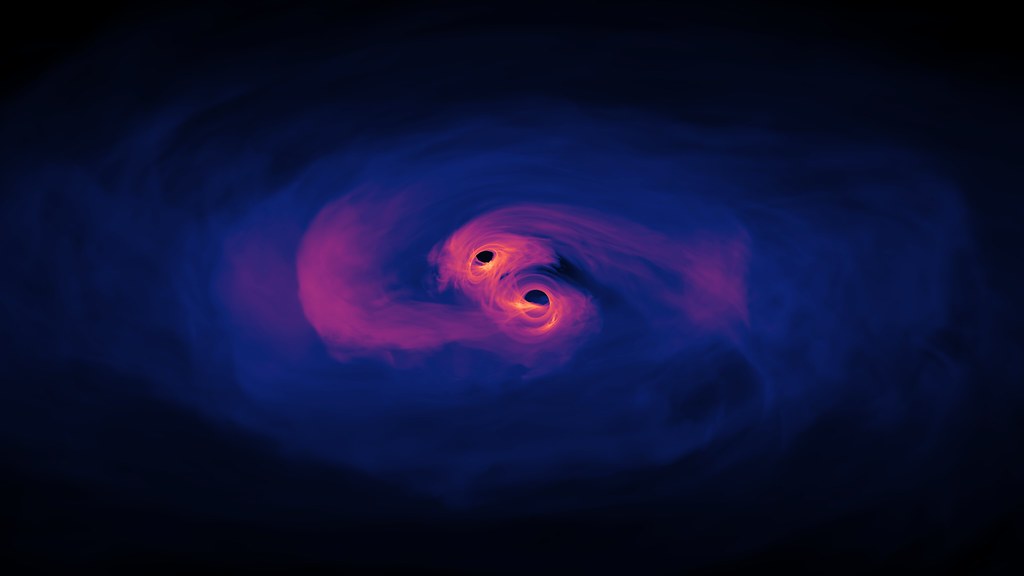
The discovery of the mysterious little red dots by the James Webb Space Telescope has sparked intriguing discussions among astronomers. Many researchers are now considering whether these dots could be evidence of tiny black holes formed during the early universe.
Scientists propose that if these tiny black holes exist, they could have originated from quantum fluctuations shortly after the Big Bang. This theory suggests that these primordial black holes may behave differently compared to their larger counterparts, potentially providing insights into the conditions of the early universe.
Several points support this hypothesis:
- Unexplained Phenomena: The little red dots exhibit characteristics that do not align with known celestial bodies, leading to speculation about their true nature.
- Mass Distribution: If these dots are indeed tiny black holes, they could contribute to the overall mass of dark matter in the universe, which remains one of the biggest mysteries in astrophysics.
- Observational Techniques: The advanced capabilities of the James Webb Space Telescope allow researchers to study these objects in unprecedented detail, potentially uncovering new information about their origins.
As investigations continue, the James Webb Space Telescope may play a crucial role in unraveling these cosmic mysteries.
Understanding the Big Bang
The concept of the Big Bang is central to our understanding of the universe’s origins. It posits that the universe began as a singular, infinitely dense point approximately 13.8 billion years ago, subsequently expanding and cooling to form the cosmos we observe today. As scientists delve deeper into cosmic history, the James Webb Space Telescope plays a crucial role in examining the remnants of this explosive event.
In exploring the universe, we must consider several key aspects of the Big Bang:
- Initial Singularity: The moment of the Big Bang marked the beginning of time and space.
- Cosmic Inflation: A rapid expansion occurred almost instantaneously, leading to the universe’s vastness.
- Formation of Elements: In the aftermath, hydrogen and helium were created, laying the groundwork for stars and galaxies.
- Cosmic Microwave Background: The faint afterglow from the Big Bang provides critical insights into the early universe.
As the James Webb Space Telescope continues to observe distant galaxies and cosmic phenomena, it offers unprecedented clarity. By studying the light from these ancient objects, astronomers hope to gather evidence that could unlock further secrets of the Big Bang, potentially reshaping our understanding of the universe’s evolution.
The Importance of Cosmic Discoveries
The universe is a vast expanse filled with mysteries waiting to be uncovered. Cosmic discoveries play a pivotal role in enhancing our understanding of fundamental questions about existence, the origins of the universe, and the nature of celestial phenomena. The James Webb Space Telescope (JWST) is at the forefront of these discoveries, providing unprecedented insights into the cosmos.
One of the most significant aspects of cosmic exploration is its potential to reshape our understanding of physics and cosmology. The findings made by telescopes like JWST can lead to breakthroughs in our knowledge about:
- The formation of galaxies in the early universe.
- The lifecycle of stars and the creation of elements.
- Dark matter and dark energy, which comprise most of the universe’s mass-energy content.
- Exoplanets and their potential to harbor life.
Each cosmic revelation not only answers existing questions but also raises new ones, creating a ripple effect in the scientific community. The James Webb Space Telescope, with its advanced technology and capabilities, is uniquely positioned to make these groundbreaking discoveries, potentially transforming our comprehension of the universe.
What Experts Are Saying
Experts have varying opinions on the capabilities of the James Webb Space Telescope and its role in uncovering the mysteries of the universe. Many astrophysicists believe that the telescope is a groundbreaking tool, poised to shed light on phenomena that have baffled scientists for decades.
Dr. Emily Ramos, an astrophysicist at the Space Science Institute, stated, “The James Webb Space Telescope allows us to observe the universe in unprecedented detail. Its advanced infrared capabilities can provide insights into the formation of celestial objects, including these mysterious little red dots.”
Conversely, some researchers express caution. Dr. Alan Chen, a cosmologist at the Institute for Advanced Studies, remarked, “While the James Webb is an incredible instrument, we must ensure that we are interpreting the data correctly. The nature of these little red dots still requires rigorous scrutiny.”
Moreover, Dr. Lisa Huang, a prominent researcher in early universe studies, emphasized the importance of collaboration among scientists: “The James Webb Space Telescope is just one piece of the puzzle. We need to integrate findings from various observatories to draw meaningful conclusions about our cosmic beginnings.”
As the debate continues, the scientific community remains hopeful that the James Webb Space Telescope will unveil new aspects of the cosmos.
Future Implications for Space Research
The implications of the discoveries made by the James Webb Space Telescope extend far beyond the immediate findings. As researchers analyze the mysterious little red dots, they are beginning to rethink many established theories regarding the origins of the universe. These cosmic phenomena could pave the way for groundbreaking advancements in our understanding of black holes and dark matter.
Experts suggest that if these dots are indeed tiny black holes, they could provide critical insights into the conditions of the universe shortly after the Big Bang. This would not only validate existing models but also challenge some long-held assumptions about cosmic evolution.
Moreover, the James Webb Space Telescope offers unprecedented capabilities that could enhance future space research. The ability to observe distant objects with remarkable clarity means that scientists can revisit previously unexplored areas of space and time. This opens up possibilities for:
- Identifying new celestial phenomena that may redefine our understanding of astrophysics.
- Exploring the formation of galaxies in the early universe, shedding light on their development.
- Investigating the nature of dark energy and its role in cosmic expansion.
In conclusion, the future of space research is poised for transformative discoveries, thanks in part to the capabilities of the James Webb Space Telescope.
Conclusion: What’s Next for Webb?
As the scientific community continues to analyze the findings from the James Webb Space Telescope, the questions surrounding the little red dots persist. These enigmatic observations may redefine our understanding of early cosmic formation and the nature of black holes. The telescope has proven to be a revolutionary tool, offering unprecedented insights into the universe’s infancy.
Looking ahead, researchers are eager to leverage the capabilities of the James Webb Space Telescope to delve deeper into these cosmic mysteries. Future studies will focus on:
- Further Analysis: Ongoing examination of the data collected may reveal more about the characteristics and origins of the red dots.
- Expanded Observations: New targets and celestial phenomena will be observed to compare and contrast findings.
- Collaboration: Scientists across various disciplines will collaborate to interpret the implications of these discoveries.
- Technological Enhancements: As the mission progresses, improvements in data analysis methods may lead to even more significant revelations.
Ultimately, the James Webb Space Telescope stands as a testament to human curiosity and innovation. Its ongoing mission promises to unlock further secrets of the cosmos, potentially reshaping our grasp of the universe for generations to come.
Photo by Pixabay on Pexels
References
Space · James Webb Space Telescope
You might also like
Content Strategies A … · Mookuthi Amman 2 Box … · Sashikumar Sreedhara …