Giant black holes have been found just 900 million years after the Big Bang, a discovery that challenges current astronomical theories and expands our knowledge of cosmic evolution.
What Are Giant Black Holes?
Giant black holes are among the most intriguing and mysterious objects in the universe. These astronomical phenomena are defined by their incredibly large mass, typically exceeding millions to billions of times that of our Sun. They are formed from the remnants of massive stars that have undergone gravitational collapse, leading to a point of infinite density known as a singularity.
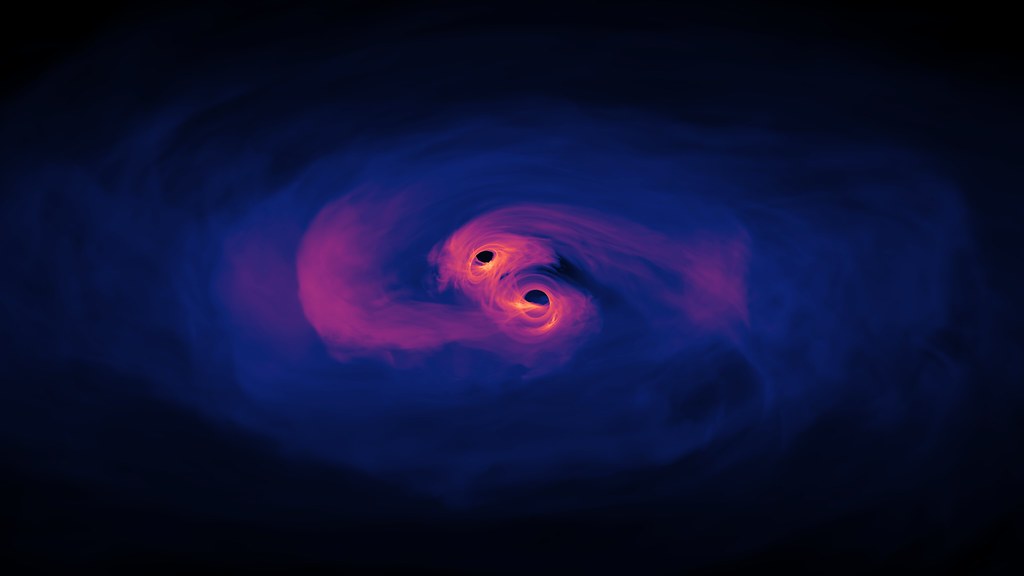
One of the defining characteristics of giant black holes is their ability to exert a powerful gravitational pull, which influences the motion of nearby stars and gas. This gravitational influence can result in the formation of accretion disks, where matter spirals in and emits intense radiation as it approaches the event horizon.
Recent discoveries have revealed giant black holes existing in the early universe, some forming just 900 million years after the Big Bang. These findings challenge previous understandings of how quickly such massive objects can grow and evolve. Astronomers believe that studying these ancient giants can provide valuable insights into the formation of galaxies and the evolution of the cosmos.
In summary, giant black holes play a crucial role in our understanding of the universe, and ongoing research continues to uncover their secrets, reshaping our view of cosmic history.
The Discovery Timeline
The discovery of giant black holes has transformed our understanding of the universe, particularly following groundbreaking research published recently. The timeline of these discoveries highlights the rapid advancements in astronomical techniques and technologies.
- 2019: The Event Horizon Telescope (EHT) collaboration released the first-ever image of a black hole, located in the center of the galaxy M87. This monumental achievement provided compelling evidence for the existence of supermassive black holes.
- 2020: Researchers announced the discovery of a giant black hole in the early universe, located approximately 900 million years after the Big Bang. This finding suggested that these colossal entities could form much earlier than previously thought.
- 2021: New observational data from various space telescopes revealed the existence of several more giant black holes, enhancing our understanding of their formation and growth during the universe’s infancy.
- 2023: Astronomers uncovered two additional giant black holes, pushing the boundaries of our knowledge and reinforcing the idea that such massive structures played a significant role in shaping galaxies.
These discoveries not only redefine the timeline of giant black holes but also challenge existing theories regarding their evolution and the conditions of the early universe.
Implications for Cosmology
The discovery of giant black holes has profound implications for our understanding of cosmology. These massive structures challenge existing theories about the formation and evolution of galaxies and the universe itself. Researchers are now reevaluating the timeline of cosmic events, particularly concerning the growth of black holes in the early universe.
Previously, it was believed that giant black holes took billions of years to form, but findings suggest that they emerged much earlier than anticipated. This rapid formation raises questions about the conditions in the early universe that allowed such massive entities to exist just 900 million years after the Big Bang.
Scientists are particularly intrigued by how these giant black holes could influence their surrounding environments. The presence of such immense gravitational forces may affect star formation rates and the distribution of matter within galaxies. Furthermore, understanding these black holes could provide insights into the fundamental laws of physics and the nature of dark matter.
As astronomers continue to study these ancient giants, they hope to uncover more about their role in shaping the universe. The implications of this discovery extend beyond black holes themselves, offering a deeper understanding of cosmic history and the forces that govern it.
How Do Black Holes Form?
The formation of black holes is a complex process that begins with massive stars. These stars, at least 20 times the mass of our Sun, go through a series of life stages, ultimately leading to a cataclysmic explosion known as a supernova.
During a supernova, the outer layers of the star are expelled into space, while the core collapses under its own gravity. If the remaining core is sufficiently massive, it will continue to collapse, eventually giving rise to a black hole. This is the standard process for stellar black holes.
However, the formation of giant black holes is believed to occur through different mechanisms. Some theories suggest that they may form directly from the gravitational collapse of massive gas clouds in the early universe, bypassing the star stage altogether. Other models propose that smaller black holes could merge over time, accumulating mass and growing into giant black holes.
Recent discoveries have shown that giant black holes can exist even in the early universe, challenging previous assumptions about their formation. This has led astronomers to reconsider the timelines and conditions necessary for these massive entities to emerge, further deepening our understanding of the cosmos.
Astronomical Techniques Used
The discovery of giant black holes has been made possible through a variety of astronomical techniques that have evolved significantly over the years. These methods allow scientists to observe and analyze distant cosmic phenomena, shedding light on the formation and evolution of these massive entities.
- Gravitational Lensing: This technique utilizes the bending of light around massive objects, like giant black holes, to reveal their presence and properties. By observing how light is distorted, astronomers can infer the mass and size of the black holes.
- Radio Astronomy: Employing radio telescopes, researchers can detect the emissions from gas and dust swirling around black holes. This method provides insights into the behavior and characteristics of these colossal structures.
- X-ray Observations: Giant black holes often emit X-rays as matter is heated to extreme temperatures before being consumed. Space-based telescopes detect these emissions, allowing scientists to study black holes that are otherwise invisible.
- Computer Simulations: Advanced simulations model the environments around black holes, helping astronomers predict how they would behave under various conditions. This theoretical framework supports observational data.
Through these techniques, astronomers continue to unravel the mysteries surrounding giant black holes, significantly enhancing our understanding of the universe.
Future Research Directions
The discovery of giant black holes has opened new avenues for research in astrophysics, prompting scientists to reevaluate existing theories and explore uncharted territories. Future research directions could focus on several key areas:
- Early Universe Exploration: Understanding how giant black holes formed so soon after the Big Bang is crucial. Researchers aim to investigate the conditions that allowed for their rapid emergence.
- Galaxy Formation: The relationship between giant black holes and galaxy evolution remains a significant question. Studies will seek to uncover how these massive entities influence star formation and the structure of galaxies.
- Gravitational Waves: The detection of gravitational waves from merging black holes offers a new way to study these phenomena. Future observations may reveal more about the dynamics of giant black holes and their interactions.
- Dark Matter Connection: Exploring the potential links between giant black holes and dark matter could reshape our understanding of the universe’s composition.
- Advanced Observational Techniques: Continued advancements in telescopes and imaging technology will enable astronomers to study giant black holes in greater detail, leading to new discoveries.
These future research directions promise to deepen our understanding of giant black holes and their role in the cosmos.
Photo by Uroš Drljača on Pexels