
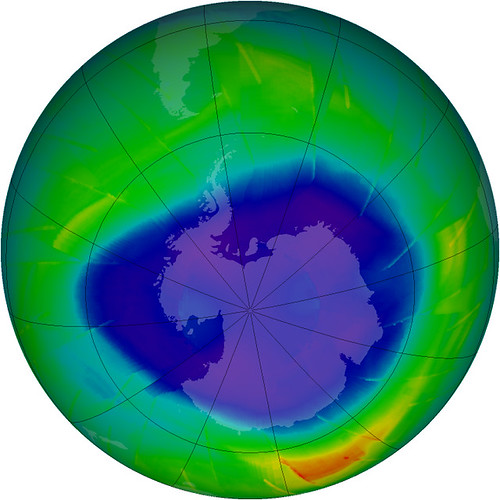
Earth’s ozone hole has swelled to more than twice the size of the United States, prompting urgent discussions about its implications for the environment.
What Caused the Ozone Hole Expansion?
The recent expansion of Earth’s ozone hole has sparked concern among scientists and environmentalists alike. This phenomenon has been attributed to several key factors that exacerbate the depletion of ozone in the stratosphere.
- Increased Emissions of Ozone-Depleting Substances: Despite international efforts such as the Montreal Protocol, illegal production and use of chlorofluorocarbons (CFCs) continue to contribute to the problem.
- Climate Change: Rising global temperatures can influence atmospheric dynamics, making it easier for polar stratospheric clouds to form, which facilitate the chemical reactions that destroy ozone.
- Natural Variability: Seasonal weather patterns and volcanic activity can also play a role in the size and durability of the ozone hole, leading to variations in its extent each year.
- Polar Vortex Strength: A stronger polar vortex can trap cold air over Antarctica, leading to prolonged conditions that favor ozone depletion.
As the ozone layer serves as a shield against harmful ultraviolet radiation, understanding the causes of the ozone hole’s expansion is crucial for developing effective strategies to mitigate its impact on the environment and human health.
Impact on Global Climate
The recent expansion of Earth’s ozone hole has significant implications for global climate. As the ozone layer continues to thin, it allows increased ultraviolet (UV) radiation to penetrate the atmosphere, leading to a variety of environmental and health challenges. The rise in UV exposure can exacerbate climate change by affecting ecosystems and altering weather patterns.
One of the most concerning impacts is on marine life. Increased UV radiation can harm phytoplankton, the foundation of the oceanic food chain, disrupting the entire marine ecosystem. Similarly, terrestrial plants are also vulnerable, with potential reductions in crop yields affecting global food security.
The effects extend beyond ecosystems as well. Higher UV levels can lead to increased rates of skin cancer and cataracts in humans, prompting public health concerns worldwide. Furthermore, alterations in climate can lead to more extreme weather events, including droughts and floods, which can destabilize communities and economies.
As scientists observe the worst expansion of Earth’s ozone hole in recent history, the urgency for global action becomes clearer. Addressing the root causes of ozone depletion is essential to mitigate these impacts and protect both human health and the environment.
Recent Scientific Findings
Recent scientific findings have raised alarms regarding the state of Earth’s ozone hole, particularly as it has experienced the worst expansion in recent history. This year, researchers have documented a significant increase in size, with the hole now measuring over twice the size of the United States. Such an alarming development has prompted scientists to delve deeper into the reasons behind this unprecedented growth.
Key observations from satellite data indicate that the ozone layer above Antarctica is thinning at an accelerated rate. Researchers attribute this phenomenon to a combination of factors, including persistent cold temperatures in the stratosphere and increased levels of ozone-depleting substances, despite international agreements such as the Montreal Protocol aimed at curbing their use.
Moreover, studies suggest that the expansion of Earth’s ozone hole could have far-reaching consequences for both human health and ecosystems. Increased ultraviolet (UV) radiation reaching the Earth’s surface poses risks such as higher rates of skin cancer and cataracts, while also affecting marine life and agriculture.
As scientists continue to monitor the situation, there is a growing urgency to address the factors contributing to the ozone layer’s deterioration and work towards effective solutions.
How Can We Protect the Ozone Layer?
The recent expansion of Earth’s ozone hole has raised significant concerns about environmental protection. To address this pressing issue, a multifaceted approach is essential.
Firstly, reducing the use of ozone-depleting substances is crucial. Governments and industries need to enforce stricter regulations on chemicals like chlorofluorocarbons (CFCs) and halons that harm the ozone layer. Transitioning to safer alternatives can greatly mitigate the damage.
Secondly, increasing public awareness is vital. Educational programs can inform individuals about the importance of the ozone layer and encourage responsible behavior, such as avoiding products that contain harmful chemicals.
Thirdly, international cooperation is necessary. Countries must work together to uphold and strengthen agreements like the Montreal Protocol, which successfully phased out many ozone-depleting substances. Continued global collaboration is essential for sustaining progress.
Lastly, supporting scientific research plays a key role. By funding studies that monitor the ozone layer and its recovery, we can better understand the impacts of our actions and develop effective strategies for protection.
In conclusion, protecting Earth’s ozone hole requires collective effort, awareness, and ongoing commitment to environmental stewardship.
By NASA Goddard Photo and Video via Openverse