Saudi Arabia missile interception is a key focus as fighting with Houthis intensifies. Recent events highlight the ongoing tensions and military responses in the region.
Background on Saudi Arabia’s military actions
In recent years, Saudi Arabia has faced increasing threats from missile attacks, particularly from Houthi rebels in Yemen. The ongoing conflict has led the Kingdom to enhance its military capabilities, focusing on missile defense systems to protect its territory and critical infrastructure.
The Saudi military has successfully intercepted numerous missiles and drones launched by Houthi forces, showcasing their commitment to safeguarding the nation. These interceptions are crucial given the heightened tensions in the region, where the Houthis have received support from Iran.
Saudi Arabia’s military actions can be categorized into several key areas:
- Defense Capabilities: The Kingdom continues to invest in advanced missile defense technology, including systems like the Patriot missile system.
- Regional Alliances: Saudi Arabia collaborates with other nations to bolster its defenses against aerial threats.
- Strategic Operations: The military engages in operations aimed at disrupting Houthi supply chains and launch sites.
As Saudi Arabia’s missile interception efforts evolve, the risks associated with these military actions remain a pressing concern for regional stability.
Impact of Houthi attacks on regional stability
The ongoing conflict involving Houthi attacks poses significant challenges to regional stability in the Middle East. As Saudi Arabia missile interception efforts continue, the implications of these attacks extend beyond immediate military concerns.
Several key factors contribute to this instability:
- Escalation of Hostilities: The consistent bombardment of Saudi territories by Houthi forces exacerbates tensions, prompting retaliatory strikes and heightening the risk of broader conflict.
- Humanitarian Crisis: The conflict has resulted in severe humanitarian repercussions, with civilians bearing the brunt of the fighting, thus increasing calls for international intervention.
- Regional Power Dynamics: The Houthis, backed by Iran, challenge Saudi Arabia’s influence in the region, leading to an arms race and alliances that further complicate peace efforts.
- Impact on Global Oil Supply: Any escalation threatens the stability of oil markets, as Saudi Arabia plays a crucial role in global oil production and export.
In summary, the risks stemming from Houthi attacks are multifaceted, impacting not only Saudi Arabia but the entire region.
Saudi Arabia missile interception strategies
Saudi Arabia has implemented a series of sophisticated missile interception strategies to protect its territory from ongoing threats, particularly from the Houthi forces in Yemen. These strategies focus on enhancing the kingdom’s air defense capabilities through advanced technology and international partnerships.
One of the primary components of Saudi Arabia’s missile interception strategy is the use of the Patriot missile system. This system has been instrumental in intercepting incoming missiles and drones launched by Houthi rebels. Additionally, the country has invested in the THAAD (Terminal High Altitude Area Defense) system, further bolstering its defensive measures.
Moreover, Saudi Arabia collaborates closely with the United States and other allies, sharing intelligence and resources to improve its interception capabilities. This cooperation helps in developing a comprehensive air defense network, which is crucial given the persistent threat of missile attacks.
Despite these efforts, challenges remain, such as the evolving tactics of Houthi forces and the potential for increased regional tensions, which could complicate the effectiveness of Saudi Arabia’s missile interception strategies.
International reactions to the conflict
The ongoing conflict in Yemen has drawn significant international attention, particularly following the recent Saudi Arabia missile interception incidents. Countries around the world have expressed varying degrees of concern regarding the implications of these military actions.
Several nations have voiced strong support for Saudi Arabia’s right to defend itself against Houthi missile attacks, emphasizing the need for stability in the region. The United States has reiterated its commitment to Saudi security, highlighting the importance of countering threats that could escalate into broader conflicts.
In contrast, some international organizations have criticized the heavy military response, urging all parties to seek peaceful resolutions. The United Nations has called for renewed dialogue, stressing that prolonged violence only exacerbates the humanitarian crisis in Yemen.
Additionally, neighboring countries are closely monitoring the situation, fearing that continued escalations could spill over their borders. Iran’s involvement in supporting the Houthis raises alarms about regional arms races and retaliatory strikes, making the geopolitical stakes even higher.
As the situation evolves, the global community remains divided on the best approach to mitigate the risks associated with these missile interceptions.
The recent events surrounding the Saudi Arabia missile interception have raised significant concerns about regional security. Analysts are now questioning the effectiveness of defense systems in place and the implications of such Saudi Arabia missile interception incidents on future conflicts.
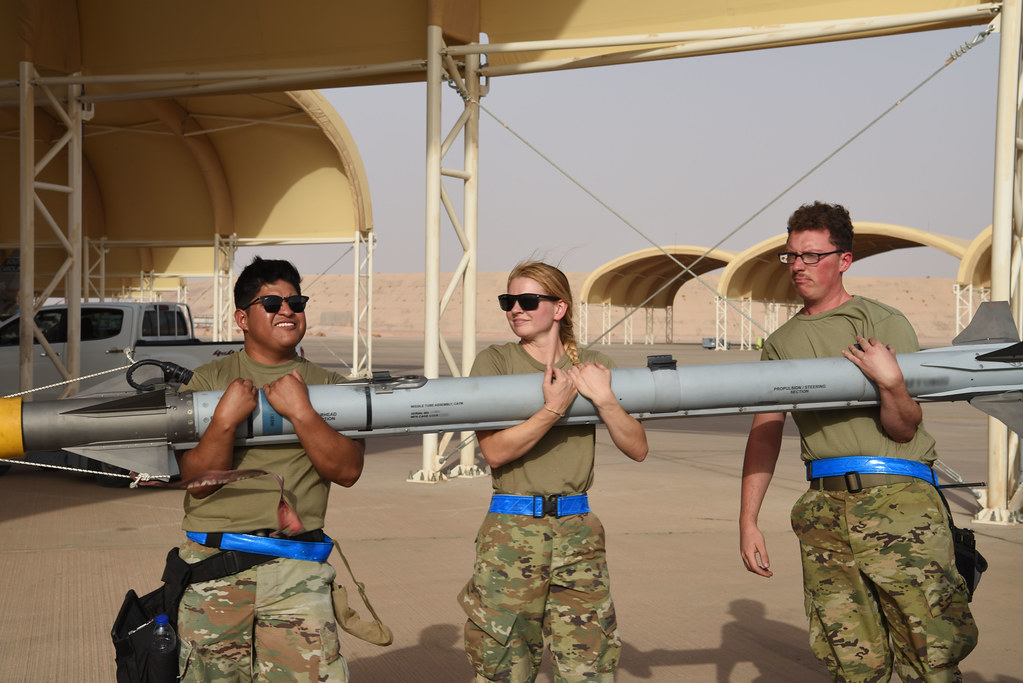
By S.C. Air National Guard via Openverse