
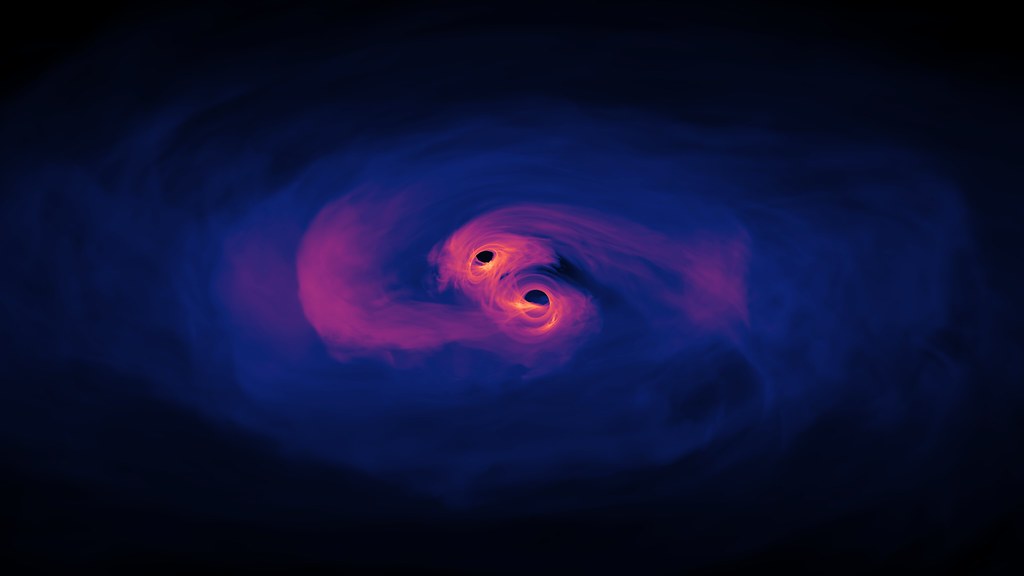
Supermassive black holes have been ejected from the centers of galaxies, according to recent findings by astronomers. This discovery sheds light on the dynamic nature of our universe and the forces at play within galaxies.
Recent discoveries in black hole research
Recent discoveries in black hole research have reshaped our understanding of the dynamics within galaxies. A groundbreaking study revealed evidence that supermassive black holes can be ejected from their galactic centers, leading to significant implications for the structure and evolution of the universe.
A team of astronomers utilized advanced observational techniques to identify a supermassive black hole that had been expelled from its host galaxy. This finding was made possible by analyzing the motion of stars and gas in the galaxy’s outskirts, revealing the black hole’s unexpected trajectory.
Key points from the research include:
- Gravitational Waves: The ejection of supermassive black holes can occur due to the merger of binary black holes, emitting gravitational waves that can be detected by observatories on Earth.
- Galaxy Mergers: The collision and subsequent merger of two galaxies can lead to the expulsion of a supermassive black hole, altering the dynamics of both galaxies involved.
- Cosmological Impact: Ejected black holes may contribute to the growth of new galaxies or influence the formation of structures in the cosmos.
As researchers continue to explore these phenomena, the implications for our understanding of black hole behavior and galaxy formation remain profound, inviting further investigation into the mysterious roles that supermassive black holes play in the universe.
How are black holes ejected from galaxies?
Recent research has shed light on how supermassive black holes can be ejected from the centers of galaxies. This phenomenon, previously thought to be rare, is now gaining more attention due to new findings from astronomers.
One of the primary mechanisms for the ejection of supermassive black holes involves the dynamics of galaxy mergers. When two galaxies collide, their gravitational interactions can lead to complex movements of their central black holes. The following factors contribute to the ejection process:
- Gravitational Waves: During a merger, the release of gravitational waves can carry away energy, allowing one black hole to gain enough momentum to overcome the gravitational pull of the merged galaxy.
- Three-Body Interactions: The interaction between the two central black holes and a third black hole can result in a slingshot effect, propelling one of the black holes out of the galaxy.
- Mass Asymmetry: If one of the black holes is significantly more massive than the other, it can dominate the dynamics of the merger, resulting in the lighter black hole being expelled.
These processes illustrate the complex and dynamic nature of galaxies and highlight the importance of studying supermassive black holes in understanding the evolution of cosmic structures.
The significance of supermassive black holes
The study of supermassive black holes holds immense significance in the field of astrophysics, as these enigmatic objects play a crucial role in the formation and evolution of galaxies. Understanding their behavior and characteristics can provide insights into the dynamics of the universe.
One of the key aspects of supermassive black holes is their influence on the surrounding stellar populations and gas dynamics. Their immense gravitational pull can shape the formation of stars and affect the overall structure of galaxies. As researchers delve into the mechanisms behind their formation, they uncover the complexities of how these black holes interact with their host galaxies.
Recent findings indicate that supermassive black holes can be ejected from the centers of galaxies, a phenomenon that challenges previous assumptions about their permanence. This discovery opens new avenues for research, prompting scientists to explore the implications of such ejections on the cosmos.
Furthermore, studying the properties of supermassive black holes helps astronomers test fundamental theories of physics, including general relativity. The ability to observe and measure these black holes can enhance our understanding of gravity and the behavior of matter under extreme conditions.
In conclusion, the significance of supermassive black holes extends beyond their immediate presence; they are key players in the cosmic narrative that shapes our universe.
Implications for our understanding of the universe
The discovery of supermassive black holes being ejected from the centers of galaxies has profound implications for our understanding of the universe. This phenomenon challenges long-held theories about the formation and evolution of galaxies, indicating that supermassive black holes may play a more dynamic role in cosmic structures than previously thought.
One key implication is the potential for supermassive black holes to influence galactic evolution. As these massive entities are propelled away from their host galaxies, they could interact with other celestial bodies, leading to the formation of new stellar systems or even triggering star formation in surrounding regions. This suggests a complex interplay between black holes and their environments, reshaping our views on the lifecycle of galaxies.
Moreover, the study of ejected supermassive black holes may provide insights into the distribution of dark matter in the universe. Understanding how these black holes move through space could help astronomers map dark matter halos, which are essential for grasping the gravitational forces that govern galaxy formation.
Finally, the findings raise questions about the future of our own Milky Way galaxy. As our understanding evolves, scientists are keen to explore whether our central supermassive black hole might also be destined for an unexpected journey, further enriching the tapestry of cosmic knowledge.
Future research directions in astronomy
The field of astronomy is poised for exciting advancements as researchers delve deeper into the mysteries of supermassive black holes. Future research directions will focus on several key areas that promise to enhance our understanding of these enigmatic cosmic giants.
- Improved observational techniques: With the development of next-generation telescopes, astronomers aim to gather more detailed data on supermassive black holes. Enhanced imaging and spectroscopic capabilities will allow for better observation of their effects on surrounding stars and gas.
- Gravitational wave detection: The ongoing advancements in gravitational wave observatories like LIGO and Virgo are expected to reveal more about the mergers of supermassive black holes, providing crucial insights into their formation and evolution.
- The role of supermassive black holes in galaxy formation: Understanding how these massive entities influence their host galaxies will remain a priority. Research will explore the interplay between supermassive black holes and star formation, as well as their impact on galactic dynamics.
- Simulations and theoretical models: As computational power increases, astronomers will utilize sophisticated simulations to predict the behavior of supermassive black holes, testing theories about their origins and how they interact with their environments.
By pursuing these research avenues, astronomers hope to unveil the complex role supermassive black holes play in shaping our universe.
By NASA Goddard Photo and Video via Openverse